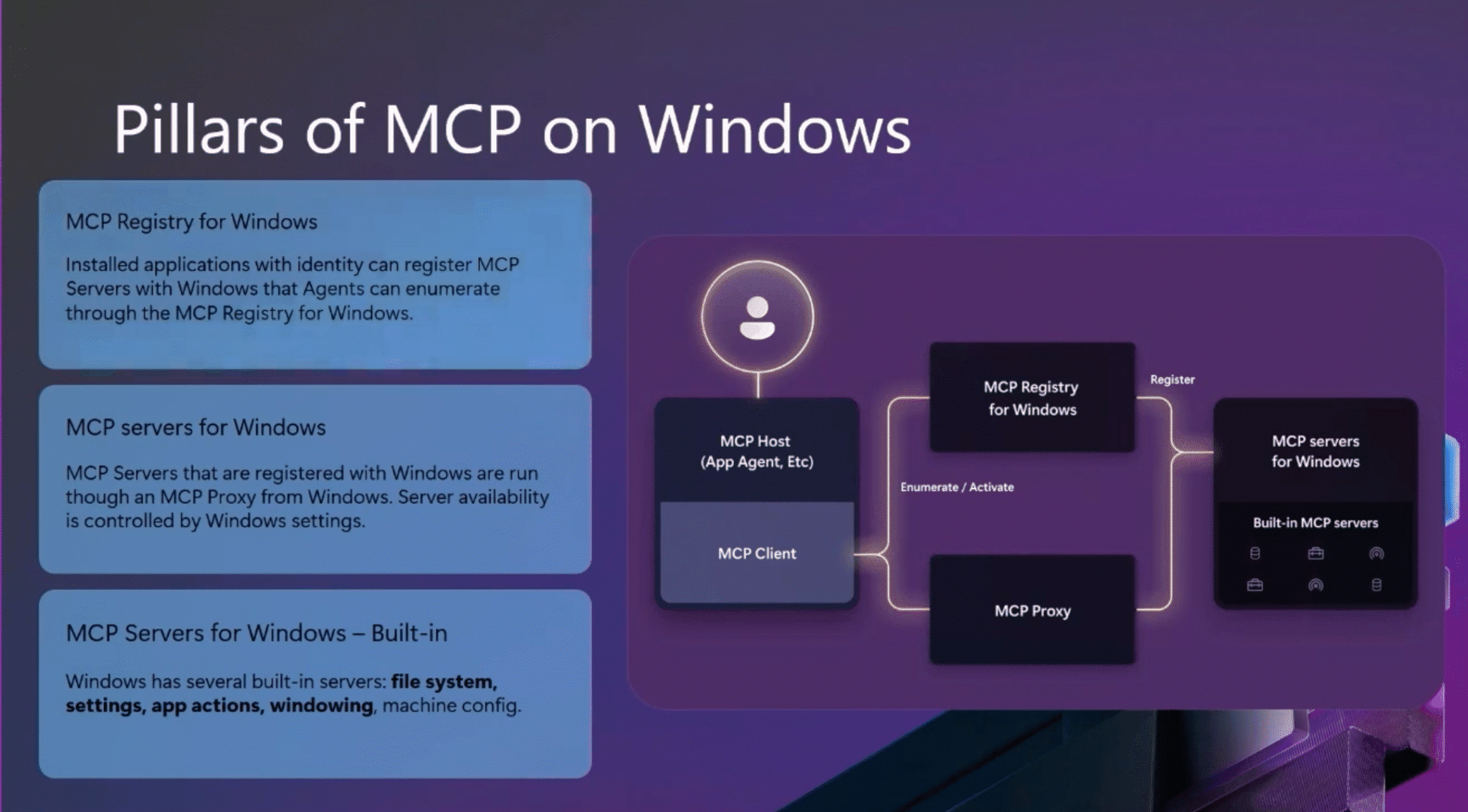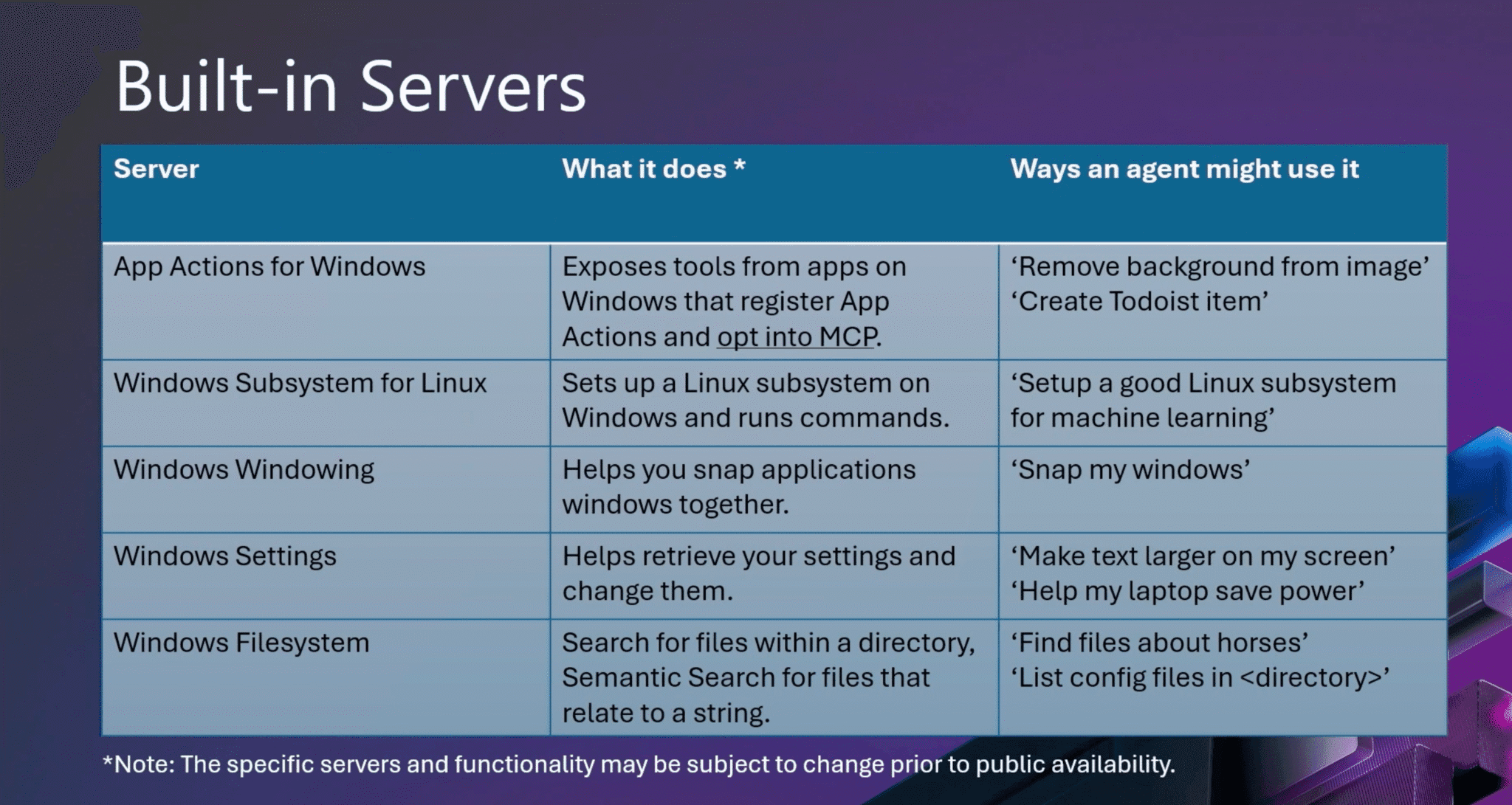
So, Microsoft’s MCP Dev Days is live and has revealed one of the most significant OS-level shifts in recent years: the formal introduction of agents as native citizens in the Windows operating system. At the core of this transformation is the Model Control Protocol (MCP), a runtime interface that allows AI agents to securely interact with system-level services like the file system, settings, app actions, WSL, and windowing, all governed and observable by design.
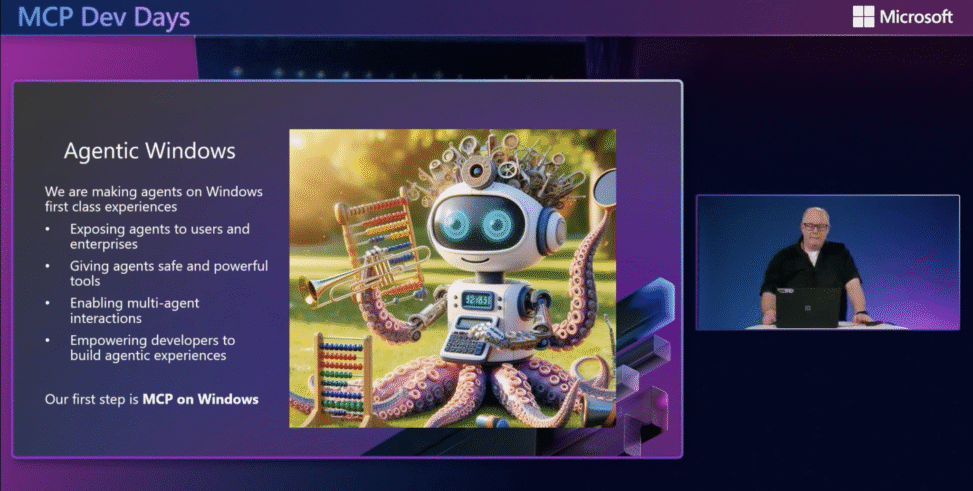
This isn’t just another developer API or ASP.NET/DLL … or even productivity overlay. Can be a foundational substrate that repositions the OS as an Agentic platform, enabling persistent, supervised, and governable agent operations. Microsoft wants Windows MCP as agents that aren’t only discoverable via a central registry, but must also pass identity checks and enterprise-defined approval layers. Consent, security, and runtime control are embedded into the lifecycle of every interaction.
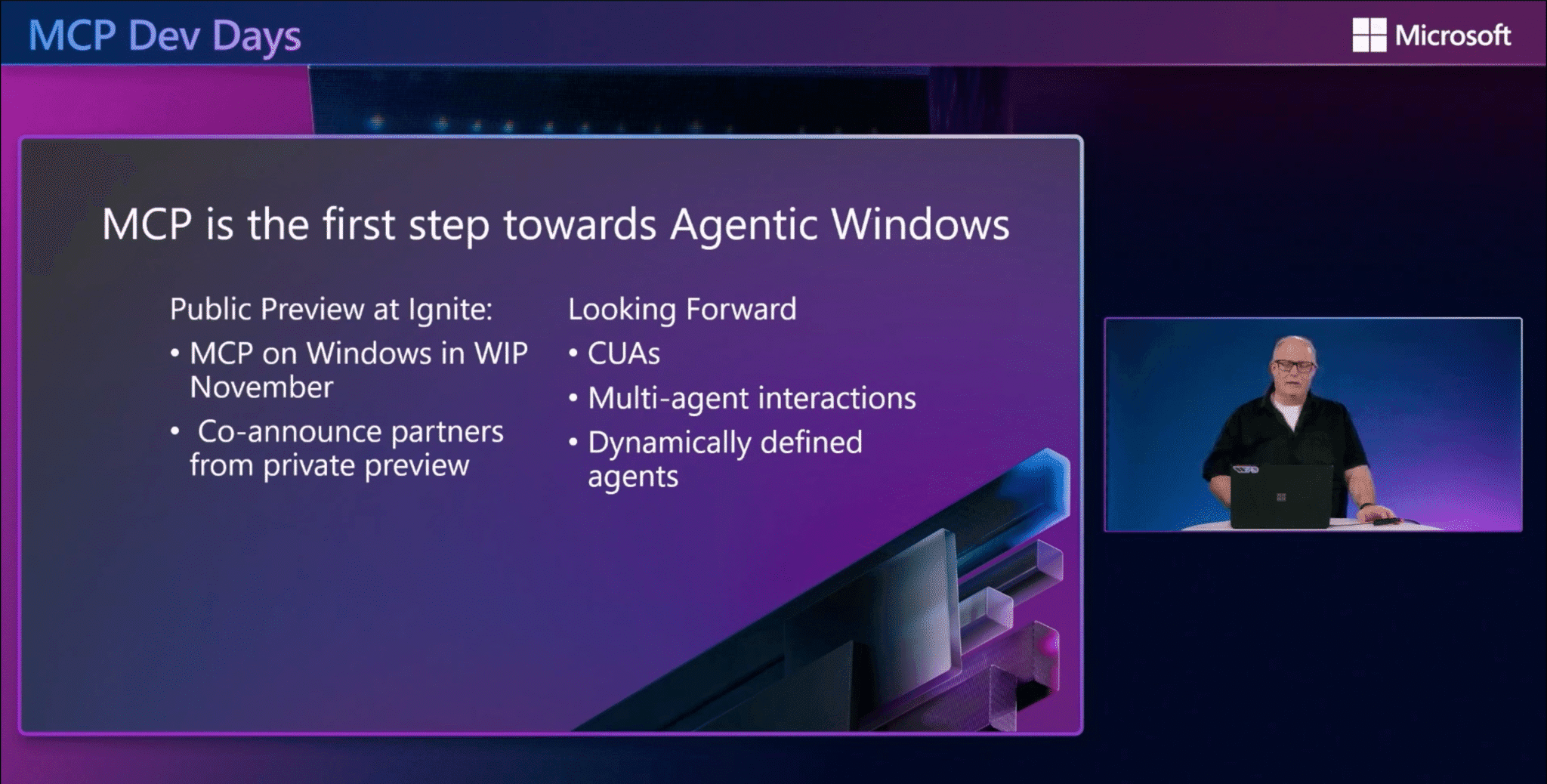
From a systems and architecture perspective, this can unlock a host of new patterns: multi-agent orchestration, dynamic agent instantiation and telemetry-driven governance. This changes the framing entirely. We’re no longer just talking about how to integrate AI into workflows, we’re looking at how to operationalise full Agentic systems at the OS level. The public preview is set for November through Windows Insider builds.